At a Glance:
Poor Speaker Placement: The Silent Sound Killer
Neglecting Room Acoustics and Reflections
The Complexity Trap: Overcomplicating System Controls
Ignoring the Foundation: Cable Quality and Phase Issues
Mastering the Low End: Subwoofer Integration
Why Trust Custom Residential Systems?
Achieving sonic perfection is a quest to elevate everyday life. The dream is a room where music doesn't just play, it breathes with the clarity of a live performance. This requires the right hardware and an understanding of how sound interacts with a room. Too often, however, small, avoidable errors compromise the entire experience of a home audio system.
By identifying and overcoming these common hurdles, anyone can transform a standard living room into a sanctuary of audio bliss. Let's explore the mistakes that stand between you and high-fidelity sound.
Create the Perfect Audio Environment
Avoid the pitfalls of setting up your home audio system incorrectly. Consult knowledgeable audio experts to achieve the results you desire. Call or visit Custom Residential Systems to learn everything you need for your home audio setup.
Home Audio SolutionsPoor Speaker Placement: The Silent Sound Killer
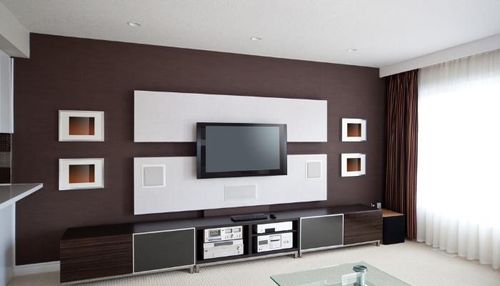
Speaker placement is a simple but critical detail that many people overlook. Placing speakers in corners or cabinets can muffle clarity and create boomy, indistinct bass.
Achieving an outstanding home audio system involves careful positioning. The height, angle, and distance of speakers are key, and it is vital to remember the tweeter ear level placement importance. Tweeters should aim directly at your ears from your primary listening spot. Incorrect height means losing out on crisp details and spatial accuracy.
Here is a practical checklist for better sound:
- Speaker Triangle Rule: Position your speakers so the distance between them is roughly 83% of their distance to your ears. This 83% rule creates an immersive soundstage with a clear center image.
- Angle Like a Pro: Turn speakers slightly inward toward the listening position to sharpen focus.
- Symmetry Counts: Maintain equal distances from side and back walls for both speakers to avoid echoes and bass imbalances.
- Tweeter Alignment: Adjust stands or mounts to align tweeters with your ear level when seated. The tweeter ear level placement importance cannot be overstated for precise audio imaging.
If you are looking for how to fix speaker placement issues, start by moving the speakers away from walls. Listen for tighter bass and clearer vocals as you make small adjustments. Use speaker stands, reposition furniture, and experiment until you find the sweet spot where your home audio system performs its best.
Neglecting Room Acoustics and Reflections
Ever invested in a top-tier home audio system only to find the sound muddy? The room itself is often the culprit. Hard surfaces like wood floors, glass doors, and bare drywall create echoes that can turn crisp audio into a washed-out mush.
Let's tackle these acoustic issues. The main goal is to treat early reflections, which can offer more clarity than most equipment upgrades.
- First Reflection Point Acoustic Treatment: To find the primary reflection points, sit in your listening chair and have a friend slide a mirror along the side walls. Where you see a speaker's reflection is a first reflection point. Placing an acoustic panel or even a bookshelf at this spot performs first reflection point acoustic treatment, blocking echoes that smear the sound.
- Reduce Home Audio Floor Reflections: A simple yet effective way to reduce home audio floor reflections is to place a plush area rug between your speakers and your listening position. This absorbs sound bouncing off the floor, which can make music tiring and dialogue difficult to hear.
- Go Beyond Walls and Floors: Don't forget the ceiling, which can also reflect sound. Ceiling clouds or panels are effective solutions, especially in dedicated home theater rooms.
For professional results, acoustic treatment firms can integrate panels, bass traps, and furnishings to optimize a room's sound. To test your room's acoustics, clap your hands loudly. Any harsh, fluttering echoes indicate areas that could benefit from acoustic treatment, helping you get the best from your home audio system.
Mismatched Components and Lack of Power
A common mistake is using mismatched components in a home audio system. An underpowered amplifier or an impedance mismatch between the amp and speakers can result in thin, strained sound, or even distortion at high volumes. This "clipping" can damage your speakers.
For better system harmony, follow these tips:
- Amp and Speaker Synergy: Ensure your amplifier has enough wattage to drive your speakers and that their impedance levels (usually 4, 6, or 8 ohms) are compatible.
- Cable Quality: Use the correct gauge of speaker wire for your setup, especially for longer runs, to prevent signal loss.
- Energy Efficiency: ENERGY STAR® certified hardware can reduce power consumption and prevent overheating.
- Tonal Balance: Avoid pairing components that are both "bright," which can cause listening fatigue. A mix, like a warm amp with crisp speakers, often yields a more balanced sound.
- Professional Help: Consider design services to curate a perfectly matched system for your needs.
To resolve issues with mismatched gear, technology offers a solution. Modern room calibration software for home audio uses a microphone to analyze test tones and automatically adjusts each speaker's frequency and timing. This process can make almost any combination of components sound balanced and cohesive, which is essential knowledge for any home audio system owner seeking professional-level sound.
The Complexity Trap: Overcomplicating System Controls

Have you ever stared at a pile of remotes and tangled cables, unsure how to play a simple song? A great home audio system should be easy for anyone to use, not require a special manual. If your friends and family are intimidated by your setup, it’s probably too complicated.
The best systems are intuitive. Here’s how to simplify a complex setup:
- Consolidate Controls: Use a universal remote or a smart home controller to eliminate the need for multiple remotes.
- Create Automated Scenes: Imagine a "Movie Night" button that automatically turns on your AV receiver, lowers the projector screen, and dims the lights. Companies specializing in home automation can integrate these controls for seamless use.
- Simplify the System: A well-calibrated two-channel setup is often more enjoyable than a complex surround sound system that is too confusing to operate.
Modern technology can help. Room calibration software for home audio uses a microphone to automatically analyze your room and optimize the settings. This process simplifies what used to be a complicated manual task. With preset modes for different activities, like parties or quiet listening, anyone can easily control the audio.
A user-focused design with a clean layout is key. A simplified home audio system integrates smoothly into your daily life, letting the music take center stage, not the technology.
Ignoring the Foundation: Cable Quality and Phase Issues

Building an incredible home audio system and then using cheap cables or ignoring speaker phase is like preparing a gourmet meal with subpar ingredients. Quality cables are essential. Look for thick, oxygen-free copper wire, strong shielding to block interference, and secure connectors. Skimping on these components can lead to hum, RF noise, and signal loss.
An even more critical issue is out-of-phase wiring. When one speaker's positive and negative wires are reversed, its driver moves in opposition to the other speaker. This causes the bass to disappear, vocals to sound hollow, and the entire soundstage to lose its impact. Recognizing audio phase cancellation symptoms and fixes is key to tuning a system. Common symptoms include:
- Weak or absent bass, even with a subwoofer.
- Disoriented sound that lacks a clear origin.
- A flat, fatiguing audio experience.
The solution is straightforward: check that all red and black connections from the amplifier to the speakers match. If the audio sounds off, try swapping the leads on one speaker. This simple adjustment can result in a dramatically fuller sound and should be on every how to fix speaker placement issues checklist.
For those seeking perfection, quality cables with solid termination also help resist interference, preserving the detail a premium home audio system is designed to produce.
Mastering the Low End: Subwoofer Integration
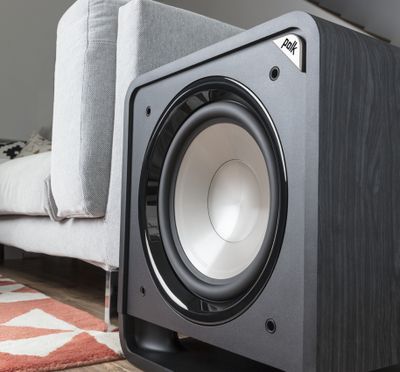
Let's bust a myth: the subwoofer isn't just a box to drop anywhere. Bass waves react to everything in your room, so random placement can cause rattles, booms, or weak thuds. An integrated sub adds cinematic punch and musical depth, but only if positioned correctly.
It's time for the subwoofer crawl technique for better bass. Here’s the process:
- Place the subwoofer in your main listening chair.
- Play a bass-heavy track.
- Crawl around the room's perimeter, listening for where the bass sounds tightest and most balanced.
- Move the subwoofer to that "sweet spot" for consistent, room-filling bass.
This technique solves "standing waves," which cause uneven bass response throughout the room. The subwoofer crawl technique for better bass is used by professionals and audiophiles for instant, noticeable benefits.
For a cohesive sound, blend your sub and speakers carefully. The bass should feel like it's coming from the entire system, not just one corner. This is the hallmark of a well-optimized home audio system.
For advanced users, apply room calibration software for home audio after finding the best sub placement. The software will fine-tune crossover points and volume, ensuring deep lows integrate perfectly.
The Path to Sonic Greatness
Every home audio system has hidden potential waiting to come alive. With each improvement, you can unlock sweeter vocals, punchier bass, and a sense of immersion that lifts every mood. By addressing a few classic obstacles, you can unlock this magic—no secret decoder ring required!
These five upgrades can make all the difference:
- Rethink speaker placement.
- Treat the first reflection points.
- Choose matching components.
- De-clutter your controls.
- Double-check for phase-reversed cables.
Imagine each adjustment as another step toward a more joyful, memorable listening environment. Music has the power to bathe every space in positivity, so bring together the right tools, a dash of patience, and plenty of optimism for the best results.
Still unsure or running into challenges? Professionals like Custom Residential Systems and Smart Automation Solutions have seen and fixed every scenario. Our blend of engineering and artistry ensures every home audio system transforms from “pretty good” to “absolutely unforgettable.” Time spent refining your sound recharges the spirit, fueling creativity, bringing people together, and making every beat mean more.
Frequently Asked Questions
The five most common mistakes when setting up a home audio system are poor speaker placement, ignoring tweeter ear level placement importance, failing to treat first reflection points, using mismatched components, and overlooking cable quality or phase alignment. Each of these errors can diminish clarity and impact, but they are all correctable with some basic knowledge.
The 83% rule for speakers is a simple formula for achieving great audio imaging. Position your left and right speakers so the distance between them is 83% of their distance from your listening chair. This setup forms an equilateral triangle, a layout proven to deliver superior stereo effects. Following this rule helps prevent sound from drifting or collapsing, ensuring you get that "in the room" experience.
Symptoms of audio phase cancellation include weak or missing bass, a hollow soundstage, and vocals that seem to float disconnectedly. This often means one speaker's positive and negative wires are reversed. To fix this, check all connections between the amplifier and speakers, ensuring red connects to red and black to black. A single swapped wire can drain the energy from your home audio system. Correcting the phase should restore tight bass, improve imaging, and bring back the music's impact.
Room acoustics almost always come first. The best equipment can sound mediocre in a poor environment, while a well-treated room can make modest speakers sound stunning. Applying first reflection point acoustic treatment and taking steps to reduce home audio floor reflections yields immediate, significant improvements. A budget setup in a treated room can easily outperform premium speakers in a room with glare and echo. Prioritize treating the room to let your home audio system perform at its best.
Why Trust Custom Residential Systems?
Custom Residential Systems has earned a reputation as a trusted leader in home technology integration by combining expertise, innovation, and personalized service. Based in Rolling Meadows, Illinois, they focus on understanding each homeowner’s unique lifestyle and needs, ensuring every audio, video, security, and automation system is perfectly tailored. Their team of certified professionals handles design, installation, and ongoing support with precision and care, using only high-quality products and industry-leading practices. With a commitment to excellence, reliability, and long-term client satisfaction, homeowners can trust Custom Residential Systems to deliver seamless, cutting-edge solutions that enhance comfort, convenience, and entertainment throughout their home.