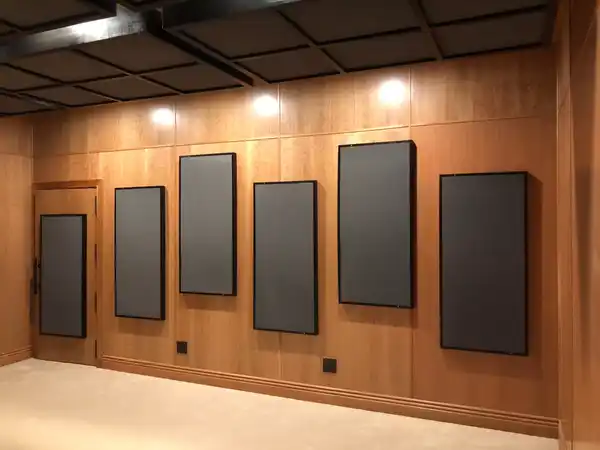
At a Glance:
The Foundation of Sound Absorption and Quality
Soundproofing vs Acoustic Treatment: Knowing the Difference
Strategic Placement for a Professional Experience
Balancing Aesthetics with Audio Performance
Why Trust Custom Residential Systems?
Picture this: a stunning home theater with a massive screen and plush leather seats. The movie begins, but the sound is a mess. Dialogue is muffled, and bass booms uncontrollably, bouncing around the room and ruining the cinematic magic. Why does a room with high-end equipment sometimes sound so poor?
The problem isn't always the speakers. The secret to great audio lies in controlling sound reflections, and that’s where acoustic wall panels come in. These essential tools excel at echo reduction, transforming chaotic sound waves into crisp, clear audio and turning any space into a sanctuary of sound.
Discover Tech Solutions for Your home
No matter what you are looking to do in your home, whether it be audio, video, motorized shading, home theater, lighting, or more, the experts at Custom Residential Systems have the knowledge and experience to bring your vision to life.
Residential SolutionsThe Foundation of Sound Absorption and Quality

When sound waves encounter a hard surface like a wall, they don't simply vanish; they bounce back. This reflection creates a phenomenon known as flutter echo, which can make even high-end speakers sound muddled, harsh, or unfocused.
To address this, it's useful to understand the Noise Reduction Coefficient, or NRC rating. This scale measures a material's ability to absorb sound. A rating of 0.0 indicates a highly reflective material, while 1.0 represents exceptional sound absorption in test conditions.
Selecting fabric-wrapped acoustic panels with a high NRC rating provides professional-grade control over a room's sound. These panels are engineered to absorb the mid and high frequencies that would otherwise reflect into the listening area. The outcome is clearer dialogue, a more defined stereo image, and reduced listening fatigue. Essentially, the room complements the audio system instead of competing with it.
How To Choose Acoustic Panels That Actually Work
Many people are drawn to attractive product images, only to purchase panels that offer minimal acoustic benefit. A more effective strategy is to prioritize performance before considering style.
Checklist for choosing effective panels:
- Look for a published NRC rating. An ideal rating for many home theaters and studios is around 0.75 or higher.
- Check the core material. For broad-band absorption, mineral wool and fiberglass typically outperform thin decorative foams.
- Confirm the thickness. Panels that are 2 to 4 inches thick generally absorb sound more effectively than ultra-thin alternatives.
- Review the mounting hardware to ensure placement at first reflection points is simple and secure.
- Match the finish to the room's decor. Modern fabric-wrapped acoustic panels are available in neutral colors, textured fabrics, and even custom-printed designs.
Some well-known brands in the acoustics industry include GIK Acoustics, ATS Acoustics, Primacoustic, Auralex, and Vicoustic. Each caters to a different type of buyer, from DIY enthusiasts on a budget to homeowners focused on design. This variety means achieving better sound does not depend on guesswork, but on smart comparison.
Soundproofing vs Acoustic Treatment: Knowing the Difference
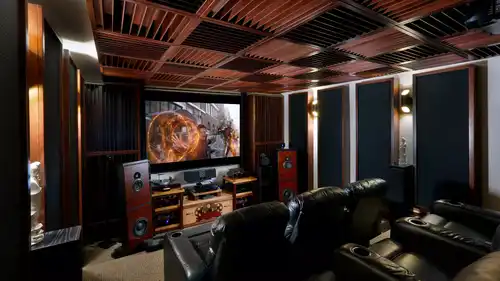
A common mistake is confusing soundproofing vs acoustic treatment. Many believe that adding acoustic foam to their walls will prevent neighbors from hearing loud music. However, these are two very different concepts.
Soundproofing aims to block sound from traveling between spaces. This typically involves adding mass, decoupling structures, using insulation, and sealing air gaps, often requiring construction methods designed to reduce sound transmission.
Acoustic treatment, on the other hand, focuses on improving the quality of sound within a single room. While acoustic wall panels offer minor sound dampening, their main job is to make the room sound better for those inside it. Think of it this way: soundproofing stops noise from crossing a boundary, while acoustic treatment shapes the sound already in the room. Both are important, but they solve different problems in recording studio acoustics and home theater design.
How To Tell Which Problem You Actually Have
Before buying anything, it helps to diagnose the issue correctly.
- If the problem is hearing traffic, neighbors, or a TV through the wall, you have a sound isolation issue that requires soundproofing.
- If voices sound hollow, music lacks clarity, or bass levels change as you move around the room, the problem is likely poor room acoustics.
- If a hand clap produces a sharp, metallic ringing sound, you are hearing flutter echo.
- If the room sounds harsh but outside noise isn't the issue, acoustic treatment will likely be more effective than major renovations.
Understanding this distinction can save a lot of money. Why spend on the wrong fix when a better result comes from solving the actual problem first?
Strategic Placement for a Professional Experience
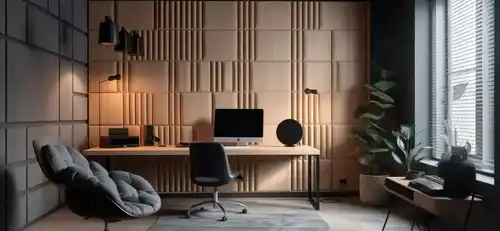
So, where should these panels go? Simply hanging them at random won't cut it. To achieve the best results, focus on the first reflection points, the spots on the side walls where sound from the speakers hits first before reaching your ears. When sound hits these points, it arrives just a fraction of a second after the direct sound, creating a smearing effect that ruins clarity. Adding acoustic wall panels at these points creates a cleaner listening window, allowing you to hear the audio as the mixer, director, or producer intended.
Low-frequency sounds tend to gather in corners, creating room nodes where the bass feels either overwhelming or completely absent. This is where bass traps become essential. Placing thicker treatment in the corners can smooth out the low end and ensure that every seat enjoys the same punchy, tight bass.
How To Find First Reflection Points
This is one of the easiest acoustic wins you can get in any room.
- Sit in the main listening position.
- Have someone else slide a mirror along the left wall.
- Mark the spot where you can see the front speaker in the mirror.
- Repeat the process on the right wall.
- Mount acoustic wall panels at those marked spots.
- If possible, repeat this for the ceiling, using proper mounting hardware.
This simple mirror trick is used in both home cinema acoustics and recording studio acoustics because it works. No advanced software is required to make your first round of improvements.
Placement Checklist for Better Results
A smart layout nearly always beats random coverage, which is encouraging news for anyone building a better room on a real-world budget.
- Treat the side-wall first reflection points before buying extra decorative panels.
- Put bass traps in at least the two front corners, then expand to all four if possible.
- Leave some reflective and diffusive surfaces in the room so the space does not sound too "dead."
- Test the room with familiar movie scenes or songs after each change.
- Make small adjustments instead of installing everything at once.
Balancing Aesthetics with Audio Performance
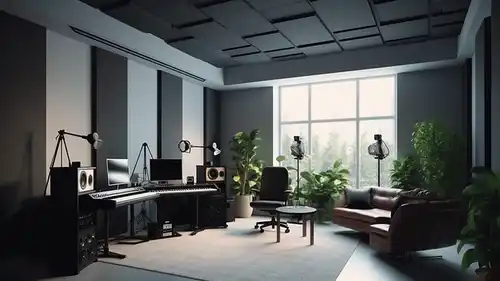
Functionality doesn't have to come at the cost of beauty. Many modern acoustic wall panels now come in various colors, fabrics, wood slat finishes, and custom prints that can complement your interior design. The days of being limited to ugly, gray acoustic foam for a home studio are long gone. You can now select fabric-wrapped acoustic panels that resemble high-end art, minimalist wall décor, or even branded feature pieces for a content creation room.
For those seeking even more complexity, consider adding diffusion panels to the rear of the room. Unlike absorption, which removes sound energy, diffusion scatters it. This technique can make a small room feel larger and more alive without the harshness of flutter echo. The goal is to create a balanced ecosystem where sound is managed, not erased. This equilibrium is what defines professional home cinema acoustics.
Learn more: Custom Residential Systems: Why Locals Choose Our Chicago Integrators
Product Styles Worth Considering
Different rooms call for different looks and performance goals.
- Fabric-wrapped acoustic panels: These are great for side walls, front walls, and multipurpose rooms where a clean design is important.
- Wood slat acoustic panels: Popular in modern media rooms and offices, they soften reflections while adding visual warmth.
- Printed art panels: Useful for movie rooms, podcast spaces, or creator studios that need branding and visual personality.
- Diffusion panels: Best for rear walls or larger rooms where preserving energy and a sense of spaciousness is key.
- Acoustic foam: This remains a budget-friendly choice for smaller creator spaces, though it typically serves as a lighter-duty solution.
A room can sound better and look incredible simultaneously. That is no longer a luxury; it's the new standard.
Expertise from Custom Residential Systems
Building a high-end entertainment space is a journey requiring both passion and technical precision. For residents in Rolling Meadows, IL, the team at Custom Residential Systems (CRS) serves as a beacon of expertise, specializing in low-voltage design and the seamless integration of audio and video systems. When a project moves beyond a DIY approach, CRS provides the specialized knowledge needed to navigate complex acoustic treatment layouts and equipment calibration.
Professional guidance ensures that every dollar spent translates into a better experience, whether the goal is a world-class dedicated cinema or a high-performance studio for creating video content. A truly immersive environment results from many small, correct decisions working together in harmony.
When Professional Help Makes Sense
A DIY plan can go far, but some situations call for expert support. Consider professional help if:
- The room has unusual dimensions or severe bass problems.
- The space is shared with a family room, office, or part of an open floor plan.
- The system includes complex components like in-wall speakers, multiple subwoofers, or requires projector calibration.
- A homeowner wants acoustic performance that also fits a polished design brief.
- The goal is to avoid trial-and-error spending on the wrong products.
This level of expertise is often the difference between a room that looks impressive and one that truly performs.
Reaching the Immersive Goal
The path to a perfect listening environment isn't just about buying expensive gear; it's about respecting the science of sound. It requires resilience and a willingness to learn. By using acoustic wall panels, anyone can elevate a standard room into a professional-grade theater or studio.
Remember, the most successful projects prioritize the user's experience. Does the room inspire creativity? Does it allow for total relaxation during a movie? When the acoustics are right, the technology fades into the background, letting the story take center stage.
Simple Starter Plan for Beginners
For those feeling stuck, here’s a simple plan to get started:
- Add two panels at the side-wall first reflection points.
- Place bass traps in the front corners of the room.
- Test the acoustics with both a familiar movie scene and a favorite music track.
- Listen to the changes before adding rear-wall treatment or diffusion panels.
- Focus on performance first; aesthetic upgrades can come later.
This kind of steady progress builds momentum, and momentum matters. A better room doesn't happen all at once. It happens one smart improvement at a time.
Frequently Asked Questionsg
The required number of panels depends on the room's size, speaker setup, and surface reflectivity. A good starting point is covering 20-30% of the wall area, but it's more effective to address the side-wall first reflection points first. Often, a few strategically placed acoustic wall panels outperform many panels installed without a plan. Begin with the most critical areas and expand treatment as needed.
Though acoustic foam is a popular, affordable option, mineral wool and fiberglass cores in acoustically transparent fabric offer superior broad-band sound absorption. These denser materials typically earn a higher NRC rating, particularly in crucial frequency ranges for monitoring and dialogue. This is why pros often choose fabric-wrapped acoustic panels over foam, as better materials lead to better results.
Acoustic wall panels primarily improve sound quality inside a room, not block significant outside noise. Issues like neighbors or traffic require sound isolation solutions like sealing gaps, adding mass, or structural changes, rather than standard panels. Understanding the difference between soundproofing vs acoustic treatment is crucial for any buyer.
Since low frequencies build up in corners, bass traps are most effective there. Begin with the four vertical corners, as treating these areas helps control room nodes and reduces boominess. If bass still feels uneven, adding more treatment or measuring the room's response can help.
Why Trust Custom Residential Systems?
Custom Residential Systems has earned a reputation as a trusted leader in home technology integration by combining expertise, innovation, and personalized service. Based in Rolling Meadows, Illinois, they focus on understanding each homeowner’s unique lifestyle and needs, ensuring every audio, video, security, and automation system is perfectly tailored. Their team of certified professionals handles design, installation, and ongoing support with precision and care, using only high-quality products and industry-leading practices. With a commitment to excellence, reliability, and long-term client satisfaction, homeowners can trust Custom Residential Systems to deliver seamless, cutting-edge solutions that enhance comfort, convenience, and entertainment throughout their home.